Showing posts with label photography. Show all posts

Saturday, November 21, 2015

ARTEREAL GALLERY IS EXCITED TO ANNOUNCE THAT WE NOW REPRESENT BEN ALI ONG


Ben Ali Ong_Nyctophilia 13_2015_Archival inkjet pigment print_Edition of 3_29.5 x 37 cm


Artereal Gallery is excited to announce that we are now representing Ben Ali Ong. Ben Ali Ong is a Sydney based artist working predominantly across photography, video and mixed media. Choosing to work solely in black and white, his brooding photographs are defined by their use of dream-like imagery and explore recurring universal themes - life and death, the poetics of every-day existence, the pain and suffering of the human condition contrasted with the beauty and mystery of the urban environment and the natural world. 

Often blurry, grainy and scratched – Ong’s pictorial choices appear to be made completely at random, creating a disjointed and surreal narrative... Preferring the artworks to speak for themselves, Ong presents them in a manner that allows the viewer to construct their own meanings and interpretations, in order to achieve a state of self-reflection. This idea is concurrent throughout all of Ong’s works and is inspired by Surrealist film and writing. The notion of the artwork being an open-ended fragment with multiple arrangements as well as the potential to convey a subconscious, or spiritual source.

The inherent allure of Ben Ali Ong’s practice stems from the psychological pull which draws the viewer into each work. Ong’s work has an underlying sense of anguish and sorrow (perhaps even horror) which clings to these black and white photographs. The shadowy, brooding drama and chiaroscuro of the artist’s work captures the delicate interplay between lightness and darkness in a way which acts as a visual metaphor for the vagaries of human existence; alluding to the idea that the beauty and fragility of life are inseparable from the horror and sorrow which accompany it. The resulting emotional pull resonates with and touches some deep inner core which resides within all humanity, transporting us away from our everyday existence. In this way, Ong’s photographs and video works, which are at once both beautiful and frightening, achieve a timeless, unknown, almost half forgotten quality or existence which touches upon ideas of life, death and morality.

Ben is currently showing work as part of Decisive Moments, a photography exhibition at Contact Sheet gallery - as reviewed in the Sydney Morning Herald and the Mosman Daily...

Friday, October 9, 2015

BEN ALI ONG // DECISIVE MOMENTS


Ben Ali Ong, Refluent Hours #15, 2007, pigment print, edition of 8, 40 x 60cm.


Ben Ali Ong has been invited to participate in Decisive Moments, a photography exhibition at Contact Sheet gallery.

Curated by Sandy Edwards and Paul McDonald, the exhibition contains a single photograph from each artist - selected by the artist. Each work represents a decisive moment within the artist’s practice, which informed their future work or career.

Exhibiting artists include: Matthew Abbott, Ben Ali Ong, Jim Anderson, Christian Blanchard, Anthony Browell, Steven Cavanagh, Catherine Cloran, Jill Crossley, Lynn Daryl Smith, Ruby Davies, Jagath Dheerasekara, Ella Dreyfus, Sandy Edwards Phillip George, Helen Grace, Tim Hixson, Bob Kersey, Kellie Leczinska, Jon Lewis, Glenn Lockitch, Thomas Luscombe, Paul McDonald, Robert McFarlane, Peter Milne, Tony Nolan, Ian Provest, Lynne Roberts-Goodwin, Moshe Rosenzveig, Michael Snelling, Rob Scott-Mitchell, Peter Solness, Julie Sundberg, John Swainston, Jenny Templin, Gordon Undy, Fiona Wolf-Symeonides, William Yang, Anne Zahalka.

As part of the exhibition Ben Ali Ong will be exhibiting an early work from 2007 entitled Refluent Hours #15.

The image in this show is from my 2007 series Refluent Hours. It was the first body of work that I exhibited in the “blurry, grainy and scratched” style that I am now associated with.

At the time I was looking at a lot of etchings and was obsessing over Francisco Goya. I had always liked low-key, grainy monochrome work, and I wanted to distinguish myself in terms of style. So I thought to try to find a way to marry these two qualities that I liked about etchings with that of photography. 

After having a go at sand papering and scratching the negative that you see here, I scanned it, and as soon as I saw the preview on the computer, I knew that with a bit of work and finesse I could make it work. For me this was my decisive moment.

The original base image is an old shot of a girlfriend.  I have a lot of Persian carpets in my place, and the blanket she is wrapped in was just an old cloth for paining on, hence the drips and marks on it. She was just lying on the floor nude one day and wrapped herself in it, and I thought she looked particularly beautiful so I just took a quick snap. It ended up perfect for the treatment I would later apply, as it has quite a flat two dimensional composition about it - which I think lends itself to the painterly style that the scratching and marking enhances." (Ben Ali Ong, 2015)

Decisive Moments runs from 11 October 2015 - 31 October 2015 at Contact Sheet in St Leonards.


Wednesday, September 23, 2015

SVETLANA BAILEY // BOWNESS PHOTOGRAPHY PRIZE


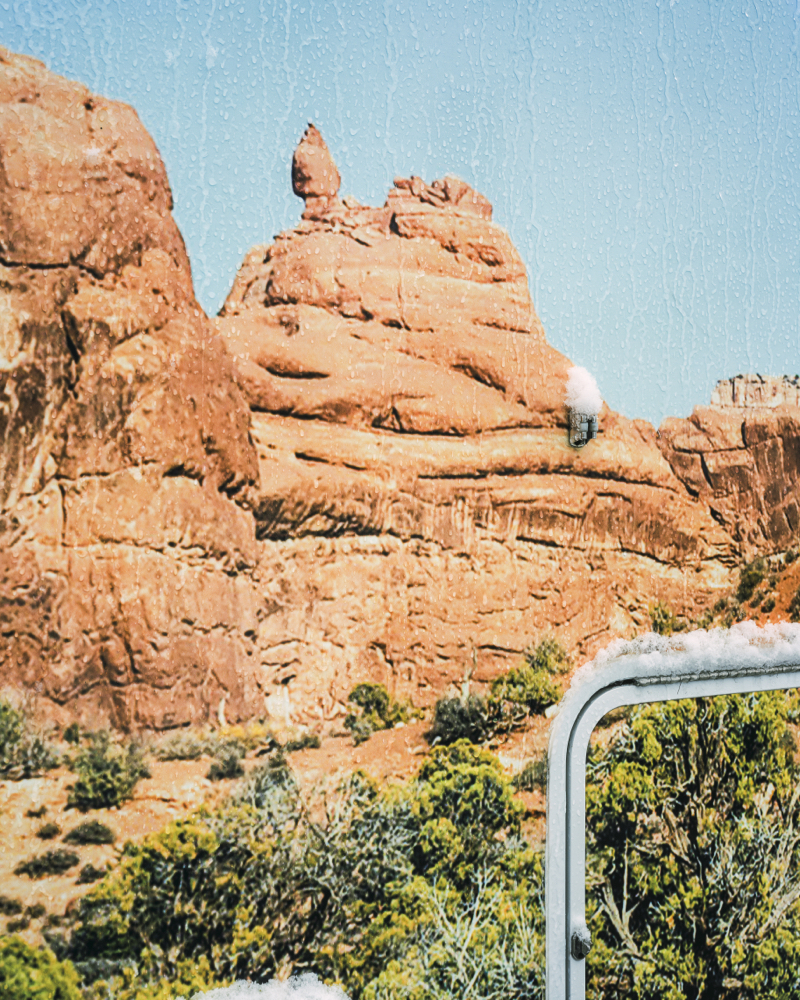
                Svetlana Bailey_Utah_ 2015_from the series All dreams come true_pigment ink-jet print_114.0 x 91.0 cm


Artereal Gallery congratulates Svetlana Bailey who was selected as one of 47 finalists for The Bowness Photography Prize 2015. 

Established in 2006 to promote excellence in photography, the annual non-acquisitive William and Winifred Bowness Photography Prize is an initiative of the MGA Foundation. The Bowness Photography Prize has quickly become Australia's most coveted photography prize. It is also one of the country's most open prizes for photography. In the past, finalists have included established and emerging photographers, art and commercial photographers.

Svetlana works with images or artifacts that I find, such as on walls, billboards or shop window displays. They present an alternative reality, and I photograph them with their surroundings, and flatten these two spaces into one. Often the images I find are a montage, creating a reality that never truly existed. I collect them into a personal global album of images created by strangers in response to a common dream. Perhaps their makers considered place and interpreted its environment and beliefs, or were trying to shape our perception of reality. I wonder if these images exist for us or against us, if they beautify our life or mislead us, and if believing in their deception adds to our satisfaction.

This year marks the 10th edition of the William and Winifred Bowness Photography Prize. On Thursday 1 October the winner will be announced as the $25,000 winner of the William and Winifred Bowness Photography Prize.

To keep updated visit the Bowness Prize Facebook.

Friday, July 3, 2015

BEN ALI ONG // ARTIST INTERVIEW


To coincide with his solo exhibition Nyctophilia, which runs until 1 August 2015, we sat down with artist Ben Ali Ong to talk about surrealism, Daido Moriyama and the importance of always carrying a camera... 


 Ben Ali Ong_Nyctophilia 2_2015


Describe your work in 100 words or less.

I am predominantly a photo media based artist, although I have produced works using video and mixed media. Choosing to work mainly in black and white, my brooding photographs are noted for their use of dream-like imagery. Dark, grainy vistas are layered against blurry, distorted objects, animals and figures, creating a disjointed and surreal narrative.

Preferring the artworks to speak for themselves, I present them in a manner that allows the viewer to construct their own meanings and interpretations, in order to achieve a state of self-reflection. This idea is woven through my work, which is also inspired by Surrealist film and writing. I am interested in the notion of the artwork being an open-ended fragment with multiple arrangements, and its potential to convey a subconscious or spiritual source. 

Why Art?

Art is my creative outlet. Some people play an instrument, or write a poem. I take photographs.

How has your artistic practice changed over time?

I have learnt to be more honest and confident with myself in regards to the creative process, as well as how I discuss my work. There is a trend that stems from art schools to over complicate things. Artists are expected to create a grand theme to justify their artworks in an attempt to give it significance. You could say this is conceptual or intellectual art, and although that is a legitimate style, it is not representative of ALL of the creative process. I am against the notion that all art practice has to fall into this category. It has taken me awhile to accept that this is not the way I work - not because I think simplicity is a virtue, but because complexity for it’s own sake is a bore.


 Ben Ali Ong_Nyctophilia 1_2015


  Ben Ali Ong_Nyctophilia 12_2015


Which Artistic movements or artists do you most identify with?

I have always looked to the work of Daido Moriyama. In the last several years I have also been very influenced by the French Photographer Antoine D’Agata. The artistic movement I most identify with is Surrealism. 

How do you work? Can you tell us about your process?

I try to carry a camera of some sort with me all the time. I like to make photographs over a specific time period and when I have accumulated a decent amount I will look over it all and try and find a connection. Ideas develop from there and I may get ideas for specific individual works to make to complete the story or body of work. I keep it all pretty loose like that. I have tried to force it in the past and it doesn’t work for me. It does for some people but I can’t do that. It just happens or it doesn’t’. 


If your work was a…

Smell... it would be wood.
Meal... it would be something simple but nourishing.


 Ben Ali Ong_Nyctophilia 14_2015


  Ben Ali Ong_Nyctophilia 18_2015


Tuesday, December 9, 2014

EMILY SANDRUSSI / DOMINO THEORY


Emily Sandrussi_Domino Theory_2013


"Three years ago I discovered a collection of Kodachrome transparencies belonging to my stepfather. These were taken in a timeframe spanning the 60s and 70s, documenting a life rendered wholly inaccessible to me by the decades since. Some of the images are familiar, despite this distance: a young family in fluorescent swimming costumes running under the spray of a backyard sprinkler – same dad, same scene, different kids, different time. The images that most interest me, however, are those that are entirely alien to me. Documents of the time and place a 23-year-old man (who remains unknown to me) found himself in – the Vietnam War. Upon discovery of these images, I was simultaneously fascinated and terrified. Even now, I look at them with a guilty hunger – lapping up the details, constructing my own narratives, all the while feeling like an intruder. Like many veterans of this war, my stepfather rarely spoke of his experiences. As a child I always wanted to know more. As an adolescent I came to understand the reasons for his silence. Now, with the stories finally, truly, eternally beyond my reach, I hold these clues to all those untold stories, passive under my gaze and my imagination. 

The discovery of these images, and the subsequent sorting and scanning of them for personal archives, marked the beginning of a project that has stretched across the years since. Following the death of my stepfather, they were revisited briefly, but after that it was years before I gave them any further thought. In the meantime, I began to work with corruption in digital image files. I had been working with spontaneously corrupted images in order to explore notions of mortality and memory. For this purpose I considered the breakdown of digital files as conceptually similar to ash or dust. After extensive work with spontaneously occurring corruption, I became intrigued by the possibility of manufacturing corruption in image files. It was at this stage of the process that I revisited the scans I had made of my stepfather’s images of the war...

The resulting images are fragmented and disjointed, with the appearance of horizontal lines reminiscent of sedimentary layers of rock in the earth’s crust. This digital glitch, or corruption, mechanical in nature, is combined in these images with the remaining evidence of the more organic disruptions accumulated by the slides – in the form of dust, fingerprints, scratches, and even what appears to be mould. Despite the various scars and colour variances that occur as a result of the corruption process, the corrupted images still retain some of the signifiers of the original photographs. Visible through these disruptions, we are able to make out the clouds, aircraft, flora, sun, and distant cities of Vietnam, as perceived by a 23-year-old Australian boy in 1969. 

The digital image is built of code comprised of letters, numerals, punctuation, and symbols. This code is like a roadmap, or a series of instructions defining the contents of the image. When there is an error during the reading or writing of this code, the resulting image is corrupted, with visual disruptions to the colour or form of the image. This corruption is often harnessed in the production of glitch art. By using data corruption, or “the glitch”, glitch art examines the nature of the medium, working with and exposing the materiality of the digital photograph. In my practice I have come to see the visual effects of the glitch as a symbol of breakdown and decay, of the transient nature of life. Mobilising the glitch in this way allows me entry to wider reflections on the nature of mortality and remembering, and the way we collectively and as individuals relate to these themes. Like memories and photographs, the nature of life and matter is that it inevitably comes to an end. Bodies, as well as memories, break down, fail, and ultimately return to dust. 

Symbolically, dust has often been linked with themes of death or decay. Once thought the smallest divisible particle of matter, dust serves as a reminder of the fragility and temporality of existence. During the prevalence of analogue photography, darkroom-dwelling photographers fought a constant battle against the threat of dust – a substance that permeated every stage of the photographic process from exposure to print. With these historic and thematic understandings of dust in mind, my work has introduced the glitch as a contemporary digital incarnation of the occurrence of dust. The glitch, like dust, serves as a reminder of the materiality and fragility of the photographic image; its presence signifies an absence, a failure in the act of documentation. Like dust, it is used as a testament to the frailty of existence. 

The discovery of my stepfather’s photographs from the Vietnam War filled me simultaneously with awe and sadness. Awe because of the revelation of this chapter of history made available to me through the photographs, sadness as a result of the realisation that these photographs represented so many stories I would never hear. This sense of loss reawakened in me a familiar grief, as I felt as though my stepfather had once again died, at least in part. The photographs were representative of a man I had never met, my stepfather as he existed before and during the war. The version of him that I met years later was a product of this experience, as well as the decades of experience in between. The version of him depicted through the photographs had long since died. Like Roland Barthes as he viewed one of the final portraits made of Lewis Payne, I was struck by the realisation that “he is dead and he is going to die”. This notion of the erasure of a past self made possible a wider reflection on the nature of remembering and history, and the effects of time on memory. Even without the experience of an event as significant as war, individuals are constantly dying to their former selves through the passage of time. The “me” of five years, or five minutes ago is just as dead in the present moment as my stepfather at 21, or even 64 years old. The war, as a moment of significant change, offered me a specific event by which to explore this sense of recurring death... "

Excerpts from Domino Theory. A research paper by Emily Sandrussi completed as part of her Bachelor of Visual Arts (Honours) in 2013 at Sydney College of the Arts.

Emily Sandrussi is currently a Master of Fine Arts candidate at University of Sydney, Sydney College of the Arts, having completed a Bachelor of Visual Arts (Honours) at the same institution in 2013 for which she was awarded the University Medal.

She was a finalist this year in the prestigious William and Winifred Bowness Photography Prize, Monash Gallery of Art, Melbourne and the prize forContemporary Landscapes in Photography, Perth Centre for Photography, Perth. Emily Sandrussi is recipient of the 2013 Artereal Gallery Mentorship Award offered in association with Sydney College of the Arts, and Domino Theory is her culminating solo exhibition from that program.

Domino Theory can be seen at Artereal Gallery until 20 December 2014.